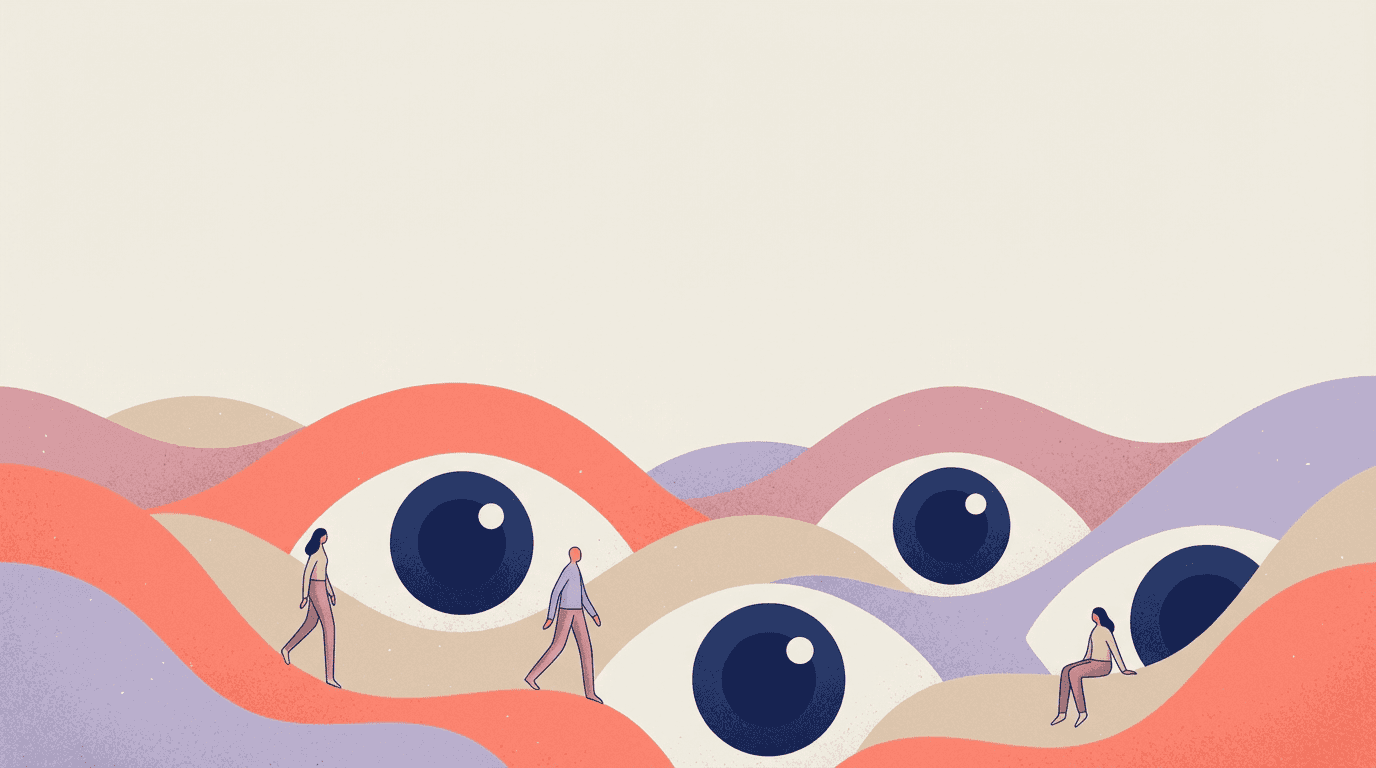
The Paradox of Modern Design: Infinite Inspiration, Less Originality

Somewhere between Dribbble and Pinterest, many designers lost their own style.
There has never been a better time to find design inspiration.Every day designers have access to thousands of examples:Beautiful landing pages.
Creative dashboards.
Experimental UI interactions.
Entire libraries of product design patterns.
You can open Dribbble, Pinterest, or any UI gallery and instantly see hundreds of polished designs.
And yet something strange has happened.
Despite having infinite inspiration, a lot of modern design looks increasingly similar.
The Infinite Inspiration Loop
Most designers start a project with good intentions.
You open Figma.
You create a new frame.
Then the thought appears:
“Let me quickly check some references first.”
So you open a few inspiration websites.
A landing page here.
A dashboard there.
A few interesting UI animations.
Twenty minutes later you’ve seen dozens of design examples.
Your brain is now full of:
gradient backgrounds
rounded cards
floating dashboards
minimal SaaS navigation
big bold hero sections
Now you go back to your file and try to design something.
But instead of starting with a clear idea, your brain begins blending everything you just saw.
The result often feels polished — but strangely familiar.
The Internet Has a Default Style
Spend enough time browsing design inspiration and you start noticing patterns.
Many modern websites use almost identical design language:
Large hero headlines.
Soft gradients.
Rounded UI cards.
Subtle shadows.
Floating elements.
None of these patterns are bad.
In fact, many of them exist for good reasons — usability, clarity, and modern aesthetics.
But when thousands of designers use the same reference material, those patterns become the default design style of the internet.
Different brands.
Different products.
But visually… very similar.
Inspiration Slowly Rewrites Your Taste
Here’s the subtle part most designers don’t notice.
When you repeatedly consume the same type of design inspiration, your brain starts recalibrating what it considers “good design.”
You begin to prefer what feels familiar.
If you’ve seen hundreds of SaaS landing pages with floating cards and gradients, your brain starts to believe:
“This is what good design looks like.”
Without realizing it, inspiration stops expanding your thinking.
It starts narrowing it.
Style Doesn’t Come From References
A lot of designers say:
“I don’t have a style yet.”
But style rarely comes from collecting inspiration.
Style emerges from making decisions repeatedly.
Maybe you love bold typography.
Maybe your layouts feel more editorial.
Maybe your spacing feels airy and minimal.
Maybe your motion is playful and expressive.
Over time those preferences become visible across your work.
That’s what people recognize as your style.
But that process only happens if you spend more time designing than browsing.
The Designers Who Stand Out Do Something Different
The designers who develop a recognizable style usually follow a slightly different process.
They don’t remove inspiration entirely.
They simply change the order.
Instead of starting with inspiration, they start with experimentation.
They open Figma and try something first:
A weird layout.
An unusual hierarchy.
An experimental interaction.
Only later do they check references if they need help refining the idea.
This keeps the core concept original, rather than assembled from other people’s work.
Create More Than You Consume
Inspiration is useful.
But it works best as a tool, not a starting point.
If you want to develop your own design style, try a simple shift:
Spend less time collecting references.
Spend more time making things.
Messy prototypes.
Strange UI experiments.
Unfinished ideas.
Those small creations are where your real design instincts start to appear.
Because somewhere between Dribbble and Pinterest, many designers accidentally replaced their own ideas with the internet’s.
And sometimes the best thing you can do for your creativity is simple.
Close the inspiration tab.
And start designing.